

Ask ten people what event management means and you’ll get ten slightly different answers. A corporate event planner will tell you it’s about logistics and stakeholder alignment. A festival producer will talk about crowd flow and production timelines. A university events coordinator will describe budget approvals and vendor contracts. They’re all right — and that’s kind of the point.
Event management is one of those fields that looks deceptively simple from the outside and reveals staggering complexity once you’re inside it. This guide breaks down what event management actually is, what the process looks like in practice, the different types of events it covers, and why it matters more than most people realize.
What Is Event Management?

Event management is the discipline of planning, coordinating, and executing events — from small private gatherings to large-scale public festivals. It encompasses every decision and task required to bring an event from concept to completion: defining the purpose, setting a budget, selecting a venue, managing vendors, coordinating logistics, communicating with attendees, and handling everything that goes sideways along the way.
At its core, event management is project management applied to a very particular kind of project — one with a hard deadline that cannot move, a live audience that expects things to go smoothly, and about a hundred variables that can change at any moment. Unlike a software release or a product launch, an event happens in real time, in front of real people, with no opportunity for a patch after the fact.
That’s what makes it both exciting and demanding as a profession.
The Core Phases of Event Management
Good event management follows a recognizable arc, even if the specifics vary by event type and scale. Most professionals break it into five phases:
1. Research and Conceptualization
Every event starts with a question: why are we doing this? The conceptualization phase is about defining the purpose, identifying the target audience, and establishing what success looks like. This is also where initial feasibility work happens — rough budget ranges, potential dates, and whether the idea is even achievable given the constraints.
Skipping this phase is one of the most common mistakes in event management. Events that skip straight to booking venues and vendors often end up technically well-executed but strategically pointless — nobody can clearly articulate what they were trying to achieve, and the outcome reflects that.
2. Planning and Design
Once the concept is approved, the real work begins. The planning phase involves building a master project plan that covers every workstream: venue selection and contracting, vendor procurement (catering, AV, decor, entertainment, security), registration and ticketing, marketing and communications, logistics (parking, transportation, accessibility), and staffing.
This is where the event’s design also takes shape — the attendee experience arc, the visual identity, the programming flow, the layout of spaces. Good event design isn’t just about aesthetics. It’s about engineering how people move through a space, how they interact with content and each other, and what they take away from the experience.
3. Vendor and Venue Coordination
Events run on relationships — with venues, caterers, AV companies, security firms, transportation providers, talent agencies, and dozens of other vendors depending on the event type. Coordinating these relationships means more than just signing contracts. It means maintaining clear communication across all parties, managing conflicting timelines, and ensuring that everyone has what they need to show up and perform at the level the event requires.
Venue coordination deserves special mention. The venue shapes almost everything else — capacity, layout options, catering requirements, technical infrastructure, permitting, and the attendee’s first impression. Choosing the right venue for the right event is a skill that experienced event managers develop over years.
4. On-Site Execution
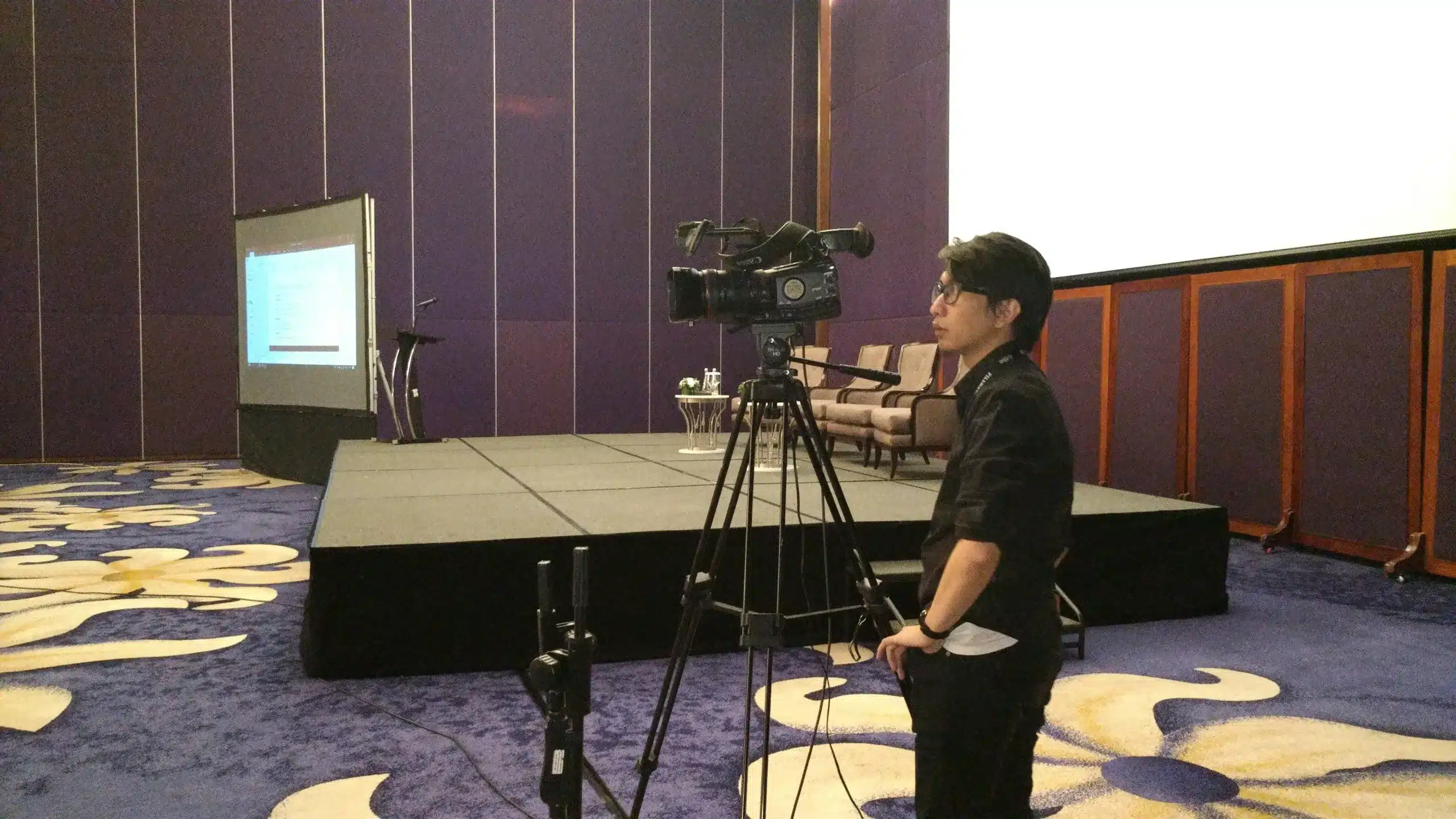
This is the phase most people picture when they think about event management — the day-of, the actual event. But by the time the event opens, good event management has already done most of the work. The on-site phase is really about executing the plan, managing the team, responding to the inevitable surprises, and keeping the attendee experience intact through whatever comes up.
Event day operations typically involve a detailed run-of-show document, a production schedule timed to the minute, a command structure that’s clear about who has decision-making authority for different types of issues, and contingency plans for common failure points (weather, AV failure, no-shows, medical emergencies, crowd management).
5. Post-Event Evaluation
An event doesn’t end when the last guest leaves. The post-event phase includes vendor reconciliation and final payments, attendee surveys and feedback analysis, internal debriefs, data reporting to stakeholders, and documentation of lessons learned for future events. For recurring events, this phase feeds directly back into the conceptualization of the next one.
Organizations that skip the post-event evaluation phase tend to repeat the same mistakes. Ones that take it seriously improve noticeably year over year.
Types of Events in Event Management
Event management spans an enormous range of event types. Understanding these categories matters because the skills, workflows, and success metrics differ significantly across them.
Corporate Events
Corporate event management covers conferences, trade shows, product launches, company retreats, team-building events, executive summits, investor days, and internal all-hands meetings. The defining characteristic of corporate events is that they serve a business objective — whether that’s generating leads, aligning a workforce, building partner relationships, or launching something new into the market. Budget accountability and ROI measurement are core competencies in this sector.

Live Entertainment and Festivals
Music festivals, food and wine events, cultural festivals, sporting events, and touring concerts fall into this category. These events are typically sold to the public as experiences and require deep expertise in ticketing, crowd management, production, sponsorship sales, and often complex permitting processes. Margins can be tight, weather is a real variable, and the stakes around safety are high.

Nonprofit and Fundraising Events
Galas, charity auctions, benefit concerts, and donor appreciation events are the lifeblood of many nonprofit organizations. The event management challenge here is unique: you’re trying to deliver a high-quality experience while managing costs aggressively, because every dollar saved is a dollar toward the mission. Donor relationship management and the emotional arc of the event — the storytelling that moves people to give — are particularly important in this category.
Social and Life Events
Weddings, milestone birthdays, graduation parties, and anniversaries represent a massive segment of the events industry. Social event management is often intensely personal — clients have strong preferences and emotional investment — and requires a different set of interpersonal skills than corporate or festival work. Detail orientation, vendor relationships, and the ability to manage family dynamics diplomatically are all part of the toolkit.

Government and Civic Events
Inaugurations, public hearings, city-sponsored festivals, parades, and official ceremonies require event management expertise with additional layers of protocol, security, accessibility requirements, and often political sensitivity. These events frequently involve multiple agencies, elected officials, and significant public scrutiny.
Virtual and Hybrid Events
The pandemic accelerated a shift toward virtual and hybrid events that hasn’t fully reversed. Virtual event management involves all the elements of in-person event management plus a whole additional layer of platform technology, streaming logistics, digital attendee engagement, and technical support. Hybrid events — where some attendees are in the room and others are remote — are arguably the most complex format, requiring the event manager to design and manage two distinct attendee experiences simultaneously.
Key Skills in Event Management
People who thrive in event management tend to share a particular combination of traits: they’re exceptionally organized, genuinely calm under pressure, naturally collaborative, and very good at holding a lot of details in their heads at once. But beyond personality, there are concrete skills that separate good event managers from great ones.
Budget Management
Event budgets are living documents that get revised constantly as scope evolves and reality intrudes on projections. Event managers need to be fluent in building budgets from scratch, tracking actuals against projections, making real-time tradeoff decisions, and communicating financial status clearly to stakeholders. The ability to deliver a great event on a constrained budget is a highly valued skill and one that gets sharper with experience.
Vendor and Contract Negotiation
Event managers spend a significant portion of their time negotiating — with venues, vendors, talent, sponsors, and service providers. Understanding what terms matter (and what you can push on), knowing when the market rate is and when you’re being overcharged, and building long-term vendor relationships that deliver better pricing and service over time are all learnable skills that make a meaningful difference in outcomes.
Risk Management and Contingency Planning
Things go wrong at events. The question isn’t whether something will fail — it’s which thing, and whether you saw it coming. Good event managers think systematically about risk: what are the most likely failure points? What’s the impact of each? What’s the contingency plan? This kind of systematic thinking is what separates events that handle adversity gracefully from ones that fall apart when the keynote speaker’s flight gets cancelled.
Communication and Stakeholder Management
Events involve a lot of people with a lot of different priorities. The event manager is usually at the center of that web — keeping clients informed, aligning vendor expectations, briefing the team, and communicating with attendees before, during, and after the event. The ability to communicate clearly, concisely, and at the right level of detail for each audience is foundational to the role.
Technology and Tools
Modern event management is increasingly technology-enabled. Event registration and ticketing platforms, attendee management systems, event apps, project management tools, floor-plan software, and production scheduling tools have all become standard parts of the event manager’s toolkit. The most effective event professionals are comfortable evaluating and adopting new tools, and know how to use technology to reduce manual work and improve the attendee experience.
Event Management vs. Event Planning: What’s the Difference?
These terms are often used interchangeably, but there’s a meaningful distinction worth drawing. Event planning typically refers to the pre-event work: developing the concept, booking the venue, arranging vendors, creating the timeline, and organizing all the moving parts ahead of the event date. Event management is broader — it includes the planning phase but extends through execution and post-event evaluation.
You could think of it this way: event planning is a subset of event management. An event planner might hand off responsibilities to an event manager once the pre-production work is complete. Or, in many organizations, one person or team handles both functions end-to-end. In practice, the distinction varies by organization, event type, and the size of the team involved.
Why Event Management Matters
It’s easy to underestimate how much depends on events being executed well. For businesses, a poorly run conference can damage relationships with key clients and partners that took years to build. For nonprofits, a gala that feels cheap or disorganized can undermine donor confidence at exactly the moment when you’re asking for their trust and their money. For destinations, a signature festival that disappoints can generate negative press that lingers long after the event is over.
Conversely, a great event creates something that almost nothing else can: a shared experience. People remember how events made them feel. A well-executed conference sends attendees home energized and evangelizing. A beautifully run wedding becomes a touchstone memory for a family. A community festival that comes together creates a sense of belonging and civic pride that’s genuinely difficult to manufacture through any other means.
That’s why organizations that invest in professional event management — whether by developing in-house expertise or working with experienced external partners — consistently outperform those that treat events as an afterthought. The return on a well-managed event is real, it’s measurable, and it tends to compound over time as relationships deepen and reputations build.
The Event Management Industry Today
The events industry is large, global, and growing. It spans corporate, entertainment, hospitality, nonprofit, and government sectors, and touches virtually every industry. The Bureau of Labor Statistics classifies meeting, convention, and event planners as a distinct occupation, and employment in the field has grown steadily as organizations across sectors have recognized the value of live and experiential programming.
The industry has also evolved significantly in recent years. Technology has transformed attendee registration, check-in, engagement, and data collection. Sustainability has become a growing priority, with events professionals leading conversations about reducing environmental footprint. Inclusion and accessibility are increasingly core design considerations rather than afterthoughts. And the rise of hybrid formats has added new complexity and new possibility to what events can be and who they can reach.
For professionals entering the field, it’s a dynamic and genuinely exciting time. For organizations relying on events to drive outcomes, the bar for quality has never been higher — and the gap between events that are merely organized and events that are truly managed has never been more apparent.
Getting Started in Event Management
If you’re considering a career in event management, the good news is that there are multiple pathways in. Formal education programs in event management, hospitality, or communications provide a strong foundation. Certifications like the Certified Meeting Professional (CMP) or the Certified Special Events Professional (CSEP) signal credibility to employers and clients. And hands-on experience — volunteering on event teams, taking on coordination roles in any context — builds the practical judgment that formal education alone can’t provide.
If you’re an organization looking to improve your event management capabilities, the most important investment is usually in people: either hiring professionals with genuine event management experience or developing internal staff with structured training and mentorship. The tools matter. The vendors matter. But the person coordinating everything is where the quality of your events ultimately lives.