The FIFA World Cup 2026 is the biggest sporting event ever to land on North American soil. With a global audience of billions tuning in from June 11 through July 19, the World Cup isn’t just a sports event. It’s a community activation moment. Imagine six weeks of watch parties, cultural festivals, youth soccer clinics, fan zones, international food events, and neighborhood gatherings that your community can celebrate.
The question is, will locals and visitors find them on your website — or somewhere else?
This is where a FIFA World Cup 2026 community events calendar becomes one of the highest-leverage tools your organization can deploy this summer.
What Is a FIFA World Cup 2026 Community Events Calendar?
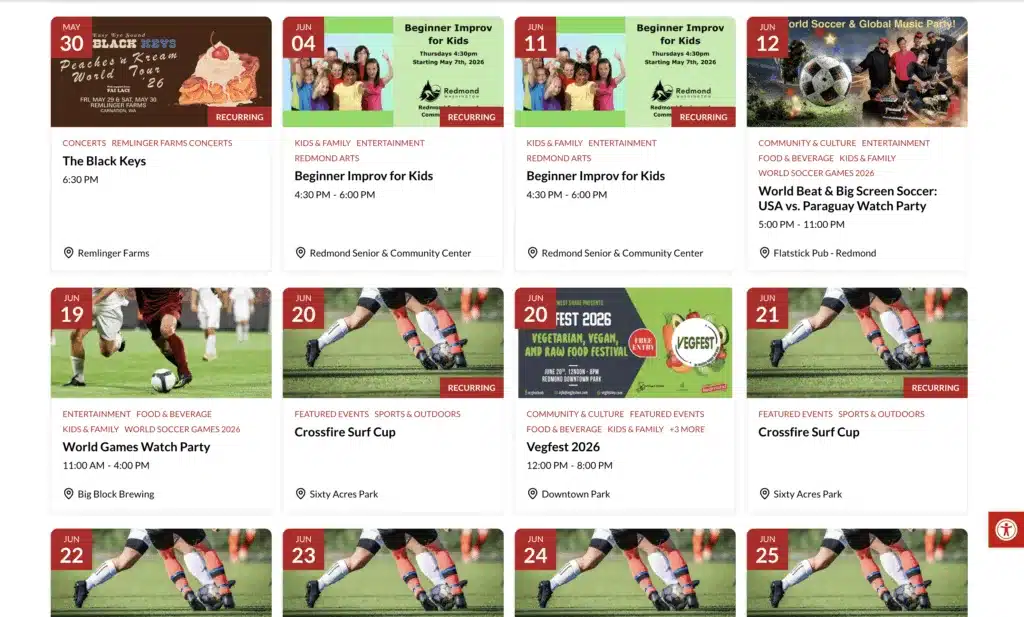
A FIFA World Cup 2026 community events calendar is a dedicated, curated hub on your website that aggregates all the local events, activations, and gatherings tied to the tournament happening in or around your community — from official fan zones and viewing parties to cultural celebrations, kids’ programs, and local business promotions.
It’s distinct from simply linking to FIFA’s official schedule. While fans can view games anywhere, they can only find your community’s local programming in one place: on your community events calendar. “If you build it, they will come.”
For DMOs, city websites, and local publishers, this is a rare window of opportunity. The World Cup brings a massive spike in local search intent. People are actively searching for things to do, places to eat, and events to attend near match venues and in their home communities. A well-built FIFA World Cup 2026 community events calendar positions your site as the go-to resource, driving real traffic and real engagement at exactly the right moment.
Why the 2026 World Cup Is a Unique Opportunity for Community Platforms
The numbers alone tell the story:
- 48 teams competing (up from 32 in previous tournaments), meaning more nations, more fans, and more diverse communities represented.
- 16 host cities across the US, Canada, and Mexico, each generating waves of local event programming.
- 104 total matches played over 39 days — the longest World Cup ever!
- The final on July 19 at MetLife Stadium in New Jersey, with a halftime show that’s expected to draw Super Bowl-level attention.
By nearly every metric, including teams, matches, projected attendance, and global viewership, it is expected to break records.
Even if your city isn’t one of the 16 official host cities, your community is not on the sidelines. Soccer clubs, restaurants, bars, cultural organizations, schools, parks, and community centers everywhere are planning World Cup–themed programming. The audience is already there. The events are already happening. What’s missing for most communities is a single, trusted, easy-to-find place to discover all of it.
That’s the gap a community events calendar fills.
Who Should Build a FIFA World Cup 2026 Community Events Calendar?
Destination Marketing Organizations (DMOs)
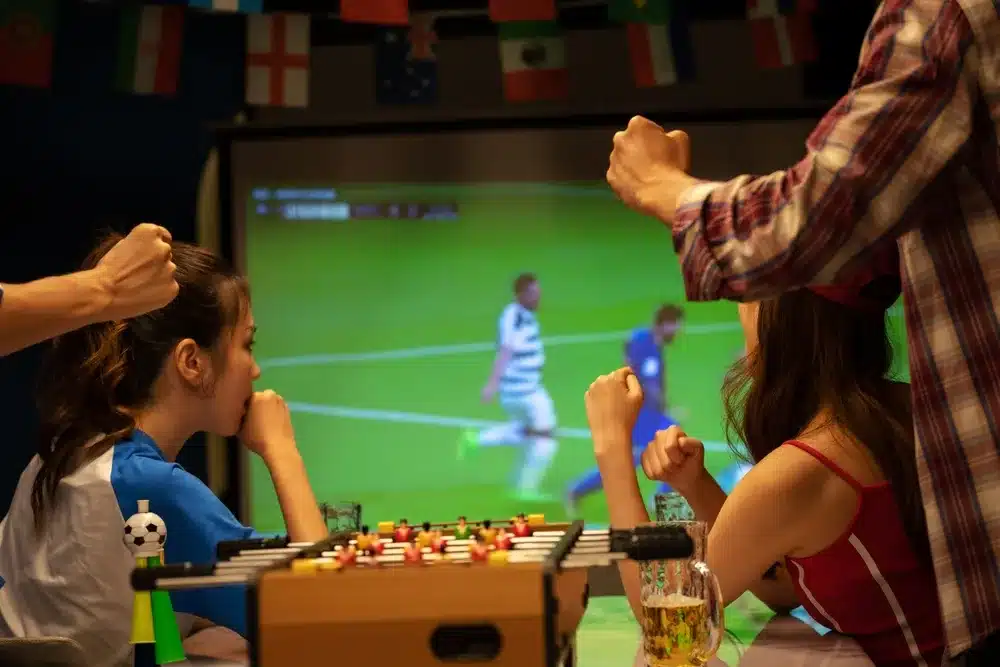
If your city is hosting matches, you’re already fielding inquiries. Visitors want to know what’s happening beyond the stadium: where to eat, what cultural events are running, how to experience the city like a local. A dedicated World Cup community events calendar on your destination website keeps visitors on your platform instead of losing them to third-party aggregators. It also gives local businesses and event organizers a place to submit their own activations, turning your calendar into a true community asset.
Host city or not, the World Cup is still a huge tourism marketing moment everywhere. Fans traveling to nearby venues will be looking for day trips, regional experiences, and local events. Position your destination as part of the World Cup story.
City and Municipal Websites
City governments have a responsibility to connect residents with community programming, and the World Cup is generating a surge of it. Youth soccer leagues, park department events, multicultural festivals, and public watch screenings all deserve visibility. A FIFA World Cup 2026 community events calendar on your city website centralizes that programming and makes it discoverable for residents and visitors alike.
Local Publishers and Media Sites
Local news sites, lifestyle publications, neighborhood blogs, and regional magazines have a content opportunity that doesn’t come around often. The World Cup is a six-week editorial calendar gift, and a community events calendar embedded on your landing page gives readers a reason to keep coming back day after day throughout the entire tournament.
How to Build Your FIFA World Cup 2026 Community Events Calendar
1. Start with the Match Schedule as Your Anchor
Your calendar doesn’t need to reinvent the wheel on match fixtures, but the FIFA schedule is the backbone of your editorial planning. Here are the key dates to build around:
- Opening Match: June 11, 2026 — Mexico vs. South Africa, Estadio Azteca, Mexico City
- Group Stage: June 11 – June 27, 2026
- Round of 32: June 28 – July 3, 2026
- Round of 16: July 4 – 7, 2026
- Quarterfinals: July 9 – 11, 2026
- Semifinals: July 14 – 15, 2026
- Bronze final: July 18, 2026
- Championship Final: July 19 — New York New Jersey Stadium (MetLife Stadium)
Use these match dates to drive urgency around local watch party listings, fan meetups, and community events. When Brazil plays, every Brazilian cultural center in your region is doing something. When USMNT takes the field, bars from Seattle to Miami are packed. Your calendar can surface all of it.
2. Aggregate Events from Every Relevant Local Source
A great community events calendar isn’t built manually — that model breaks down fast at scale. The better approach is to connect your calendar to the sources that are already publishing World Cup programming: local sports bars, community centers, cultural organizations, parks and recreation departments, soccer clubs, and event platforms like Eventbrite and Meetup.
This is exactly what Seeker Events Network was built for. Its AI-powered discovery engine can crawl event pages, venue calendars, and partner sites to automatically surface relevant FIFA World Cup 2026 local events and populate your calendar without manual data entry. You set up your trusted sources, and the calendar fills itself with options to edit before publishing.
3. Open Up Community Submissions
Some of the best World Cup events won’t come from established venues. They’ll come from the neighborhood soccer club hosting a watch party, the local restaurant running a themed prix-fixe menu during match days, or the cultural association throwing an event for their national team.
Give your community a way to submit events directly. A user-friendly submission form — ideally one where organizers can simply paste in a URL and have details auto-populated. This dramatically lowers the barrier to participation and increases the diversity and richness of your calendar. Seeker’s URL-based submission feature does exactly this, pulling event details, photos, and descriptions automatically from any public event page.
4. Automate Publishing from Approved Sources
For host city DMOs especially, the volume of World Cup programming will be too high to manage with a manual approval workflow. Set up automated publishing rules: pre-approve trusted venues, established sports bars in your network, and known cultural organizations so their events go live the moment they’re posted. This keeps your calendar current without creating a bottleneck in your team.
5. Optimize Every Event Page for Local SEO
Each event listing is an SEO opportunity. A well-structured event page with a descriptive title, date, location, neighborhood, categories, and rich event detail can rank for hyper-local queries like “World Cup watch party [city name]” or “FIFA 2026 fan zone near [neighborhood].” This is where a community events calendar compounds its value: it’s not just a service for your audience, it’s a traffic engine for your site.
Make sure your calendar platform generates clean, indexable event pages (not iFrame-embedded widgets that search engines can’t read).
6. Embed the Calendar Across Your Site
Don’t silo your World Cup 2026 events calendar on a single page. Embed it on your homepage, your “Things to Do” section, your blog posts about World Cup coverage, and any World Cup landing pages you create. The more surfaces your calendar appears on, the more entry points you create for organic and direct traffic.
What a World Cup Community Calendar Does for Your Organization
The World Cup runs for over a month, but the benefits of building a well-structured community events calendar last far longer.
Traffic that doesn’t disappear after July 19
The habits you build with your audience during the World Cup, like checking your site for local events, submitting their own listings, sharing your calendar with friends– it all carries forward. Organizations that invest in their community events calendar during high-traffic moments consistently see sustained engagement after the moment passes.
A stronger local events network
Every venue, organizer, and partner you bring into your calendar ecosystem during the World Cup becomes a contributor for every event season that follows. You’re not just building a six-week resource, you’re building the infrastructure for your community’s go-to events hub.
Positioning as the definitive local authority
In the race to become the trusted source for local information, the organizations that show up with comprehensive, accurate, and current content during high-demand moments win. The FIFA World Cup is one of those moments.
The GOOOOAAALLLL!
FIFA World Cup 2026 is generating a wave of community energy across North America that won’t come around again for a long time. DMOs, cities, and local publishers that show up with a well-built FIFA World Cup 2026 community events calendar will capture that energy and the traffic, engagement, and trust that come with it. Those that don’t will watch their audiences find those events somewhere else.
Building and managing a comprehensive community events calendar used to mean a full-time manual effort. With Seeker Events Network, it doesn’t have to. Our AI-powered platform discovers events automatically, accepts community submissions with a single URL, automates publishing from trusted sources, and embeds seamlessly on any website.
Ready to make your community the go-to destination for FIFA World Cup 2026 local events and more? Book a demo and get your calendar up before kickoff.